Bender is a Barry S. Miller College of Business grad who put her degree in finance to work — at her own company! Mills Knows Bills (MKB), is dedicated to teaching individuals and businesses how to manage and master their finances within 90 days. Bender understands the frustration around money mismanagement, struggling with where to start, and the courage it takes to take ownership of your finances.
Mastering Your Money
That’s why we’ve taken three of her best money management tips from the webinar to share with Knight Nation:
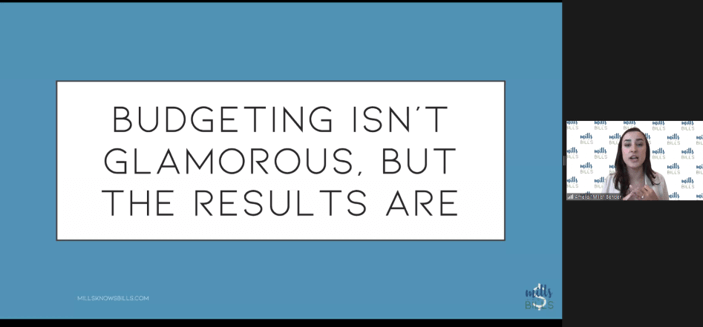
Get Comfortable with Practical Budgeting
Bender explains practical budgeting as the idea of enjoying the present moment while also planning for the future. That means you must be intentional with your spending.
Practical budgeting might be difficult to start, which is why Bender recommends “making it bite-sized.” In the webinar, she encourages Knights to identify a financial goal (saving for a down payment, for instance) and then making a timeline of when you’d like to achieve that goal so you can work backward.
In her example, she describes going out to eat as an area to make easy cuts: how often are you going? Where are you dining out? Can you cut back on the amount of drinks or appetizers that you order? Making these small, intentional decisions will help you realize where you can tighten your financial belt, and how you can repurpose that amount saved.
Establish an Emergency Fund
While we can’t always avoid tough times, we can prepare for them! Bender recommends establishing an emergency fund that covers three to nine months of living and debt expenses. This fund is only to be used in times of need to help you get back on your feet.
How do you know if you should plan for three months, nine months, or somewhere in between? Our finance expert says: “That depends on you.” Her philosophy is that you know yourself best. Imagine that your position is eliminated – consider how long you think you’d be in the market for a job. If that’s three months, plan to save that amount. If you think that could take up to nine months, reconsider your emergency fund saving goal.
The Secret to Paying off Debt? Attack Interest Rate.
Paying off debt isn’t easy, but it can be done. During the session, Bender explained that her strategy is to approach debt payoff by targeting debt with highest interest rate.
Then, you stack it! To use this debt payoff technique, you put the effort toward the highest interest rate debt to expedite that payoff, while continuing to pay the minimums on all other debts. Once that first debt goal is paid off, tackle the next highest interest rate – and you’ll have the amount from your first goal to contribute to your next one. Win-win.
Tell Me More!
While these quick financial tips are great, they don’t capture the full picture. You can watch the Adulting Series: Money Management webinar at any time on our UCF Alumni Virtual Hub or reach out to Mills herself at millsknowsbills.com for one-on-one coaching.

About the UCF Young Alumni Council
Our council is dedicated to furthering engagement and philanthropy at the University of Central Florida by enhancing the relationship between young alumni and the UCF community. Young alumni under the age of 32 currently account for one-third of our alumni population, making them our largest constituent base.
The UCF Young Alumni Council exists to build a strong network among young alumni to encourage a lifetime relationship with UCF following graduation; encourage graduates to contribute their time, talents and resources to support the university and surrounding community; as well as create and support programming and events that establish and strengthen your affinity to the university.